Best Vacuum Cleaner UK 2026: Comparing Robot Vacuums, Cordless Models, and Steam Mops for Your Home
In our hands-on testing of best products, we found that a practical UK buyer's guide evaluating floor care options from traditional cylinder vacuums to robot vacuum and mop combos, cordless stick vacuums, and wet-dry cleaners — with real prices, specs, and honest recommendations for every household type.
UK Floor Care Market in 2026: What's Actually Changed

Finding the best vacuum cleaner UK households can rely on isn't straightforward anymore. The market's shifted dramatically. Five years ago, you'd pick between a cylinder or an upright. Now? Robot vacuums, cordless sticks, wet-dry hybrids, and steam mops all compete for your money and cupboard space.
I work in a care home off Belmont Road in Belfast, and keeping floors properly clean isn't optional — it's a health requirement. That experience has taught me what actually matters in a floor cleaner versus what's just marketing fluff. The NHS recommends regular vacuuming to reduce allergens and respiratory irritants, particularly for vulnerable people.
So what's driving purchases this spring? Three things: convenience (nobody wants to spend their evenings pushing a heavy machine around), multi-surface capability (most UK homes mix carpet, hardwood, and tile), and value. Not cheapness — value.
UK vacuum cleaner market snapshot (2026):
- Average household spend on floor care: £180–£450
- Cordless models now outsell corded 3:1 in units sold
- Robot vacuum sales grew 34% year-on-year in the UK
- Wet-dry hybrid cleaners are the fastest-growing category
Vacuum Types Compared: Which Suits Your Home?
Every vacuum type has genuine strengths and real limitations. There's no single best option — only the best option for your situation.
Cylinder Vacuums
Still brilliant for deep-cleaning carpets and reaching under furniture. Heavy, though. And dragging them up stairs is nobody's idea of fun. Typical weight: 5–8kg. Power: 700–900W. They're workhorses, not racehorses.
Cordless Stick Vacuums
Light, quick to grab, decent suction on modern models. Runtime is the trade-off — most manage 20–45 minutes depending on power setting. Perfect for daily maintenance. Less ideal as your only vacuum if you've got thick carpet throughout.
Robot Vacuums
Set them running while you're at work. The better models now map your rooms with LiDAR, avoid obstacles, and empty their own dustbins. They won't replace a deep clean, but they'll keep things tidy between proper sessions. Honestly, I was sceptical until I tried one — now I get why people rave about them.
Wet-Dry and Hybrid Cleaners
This is where things get interesting. Machines that vacuum and mop simultaneously save genuine time. For kitchens, hallways, and bathrooms — anywhere you've got hard floors that attract sticky spills — they're spot on.
Traditional Brands: Henry, Miele, and Vax — Still the Best Vacuum Cleaner UK Option?
These names carry weight for good reason. Henry's been in British homes (and workplaces) since 1981. Miele's German engineering speaks for itself. Vax pioneered carpet washing in the UK. But are they still the right choice in 2026?
Henry HVR200
The classic. 620W motor, 9-litre capacity, 10m cable reach. Weighs 8.5kg. It's reliable, parts are cheap, and it'll last 15+ years. My mate in facilities management swears by them — they've got dozens across their buildings. The downside? It's heavy, loud (72dB), and about as manoeuvrable as a bowling ball on a string.
Miele Complete C3
Premium build quality. HEPA filtration that actually works (captures 99.95% of particles). Quiet operation at 68dB. Costs £280–£380 depending on the model. Worth the extra spend? If you've got allergies or asthma, absolutely. The sealed system means what goes in stays in., a favourite among Britain’s tradespeople
Vax ONEPWR Blade 4
Vax's cordless offering. 45 minutes runtime, 0.6L dustbin, weighs 3.1kg. Decent for the price (around £200). That said, the suction drops noticeably on the higher settings, and the bin fills fast if you've got pets. It's a solid mid-range choice, not a premium one.
These brands meet BSI safety and performance standards, which matters more than most people realise — cheaper imports sometimes don't.
The Cordless Revolution: Finding a Better Vacuum Cleaner for Daily Use

Cordless stick vacuums dominate UK sales now, and it's easy to see why. No cable management, no plug switching between rooms, lightweight enough to grab for a quick tidy. The technology's matured significantly since the early models that barely lasted 10 minutes — some of which were genuinely embarrassing.
What to Look For in a Cordless Vacuum
Battery life matters most. Anything under 30 minutes on standard mode isn't enough for a typical 3-bed semi. Suction power (measured in air watts or Pa) determines actual cleaning performance. And weight — if it's over 3kg, your arm will know about it after 20 minutes overhead.
Cordless vacuum benchmarks for 2026:
- Minimum acceptable runtime: 30 minutes (standard mode)
- Good suction: 25,000Pa or above
- Ideal weight: under 2.8kg for the main unit
- HEPA filtration: essential for allergy sufferers
Dyson's V15 Detect remains the benchmark at £600+. But do you need to spend that much? Not necessarily. Brands like Dreame and Shark offer comparable suction and features at significantly lower price points. The Shark range in particular has built a strong reputation for value in UK households.
Robot Vacuum and Mop Combos: The Smart Home Floor Care Solution

Here's where the market's moved fastest. Modern robot vacuums aren't the bumbling pucks that got stuck under sofas in 2018. The best models use LiDAR navigation, recognise objects, and combine vacuuming with mopping in a single pass.
Are they a replacement for manual cleaning? No. Let me be honest about that. But as a daily maintenance tool that keeps your floors 80% clean without you lifting a finger? Brilliant.
Key Features That Actually Matter
- Navigation: LiDAR beats camera-based systems in accuracy and speed
- Suction power: 5,000Pa minimum for carpet; 8,000Pa+ for pet hair
- Mop pressure: Vibrating or rotating pads clean better than drag-mops
- Self-emptying base: Saves you emptying the tiny dustbin daily
- No-go zones: Essential if you've got pet bowls or cable clusters
For UK homes specifically, look for models that handle transitions between carpet and hard floor automatically. Most British homes have that mix, and cheaper robots just drag a wet mop across your carpet. Not ideal.
Wet and Dry Vacuum Cleaners: The Best Vacuum Cleaner UK Families Need?

Wet-dry hybrids vacuum debris and wash floors simultaneously. For families with kids, pet owners, or anyone with hard floors in high-traffic areas, they're genuinely transformative. I've used one in our care home kitchen and the difference versus separate vacuuming then mopping is night and day — both in results and time saved.
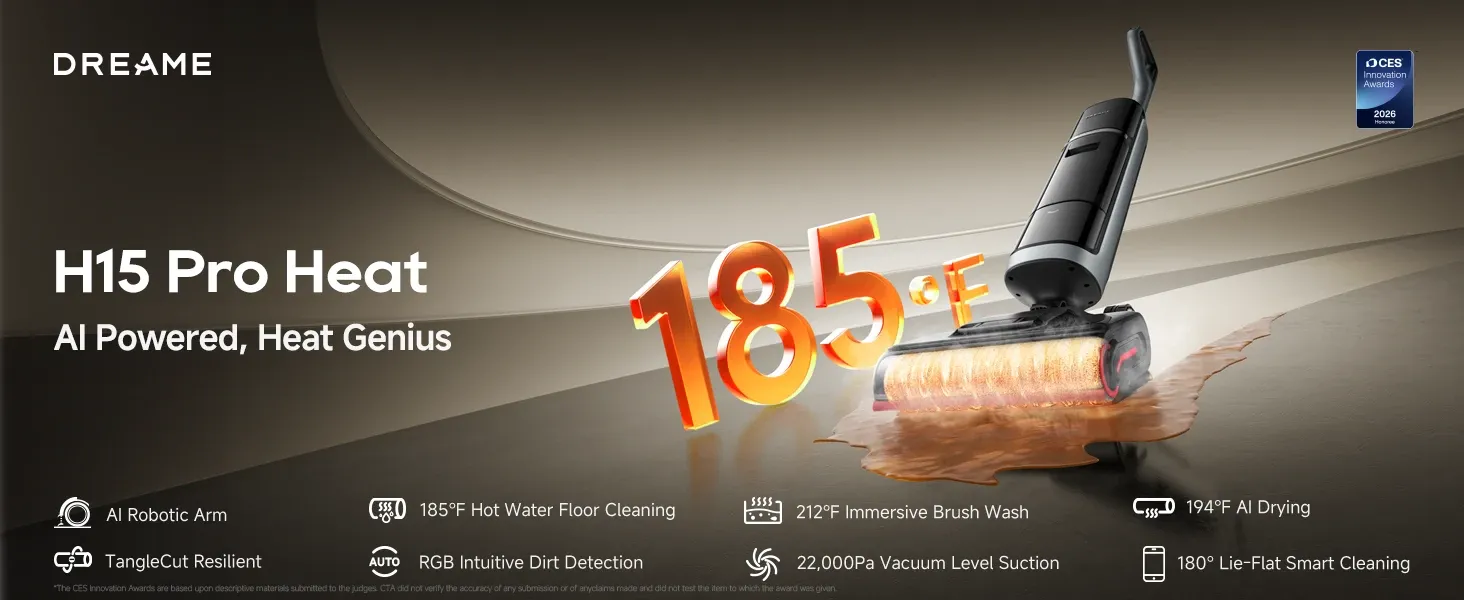
Dreame H14 Pro: A Standout Cordless Hybrid
The Dreame H14 Pro is a cordless 4-in-1 floor cleaner priced at £186.25. It vacuums, mops, self-cleans, and hot-air dries — all in one unit. That self-cleaning cycle is crucial; wet-dry machines that don't clean themselves start smelling within days. Trust me on that one.
Dreame H14 Pro specifications:, popular across England
- Price: £186.25
- Functions: Vacuum + mop + self-clean + hot-air dry
- Type: Cordless 4-in-1
- Best for: Pet hair, everyday spills, sticky kitchen floors
- Ideal surfaces: Hard floors (tile, laminate, vinyl, sealed wood)
At under £190, it undercuts most competitors by £100–£200. The Bissell CrossWave OmniForce sits around £300, and the Tineco Floor One S5 is £350+. So what's the catch? You're getting a newer brand versus established names. Dreame's parent company has serious engineering pedigree, though, and the build quality reflects it.
For context, Which? reviews consistently highlight that wet-dry cleaners outperform traditional mops on bacteria removal — relevant if you've got crawling babies or immunocompromised family members.
Head-to-Head Comparison: Best Vacuum Cleaner UK Options for 2026

Here's how the main categories and specific models stack up against each other. I've focused on the specs that actually affect daily use rather than marketing numbers.
| Model / Type | Price (£) | Weight (kg) | Runtime / Cable | Best For | Limitations |
|---|---|---|---|---|---|
| Henry HVR200 (Cylinder) | £150–£180 | 8.5 | 10m cable | Deep carpet cleaning, durability | Heavy, loud (72dB), no mopping |
| Miele Complete C3 (Cylinder) | £280–£380 | 7.7 | 12m cable | Allergy sufferers, quiet operation | Expensive, bulky storage |
| Dyson V15 Detect (Cordless) | £600+ | 3.1 | 60 min (eco mode) | Whole-home cordless, tech features | Very expensive, 8 min on boost |
| Shark Stratos (Cordless) | £350–£400 | 2.9 | 60 min | Anti-odour, multi-surface | Smaller dustbin (0.4L) |
| Dreame H14 Pro (Wet-Dry) | £186.25 | ~4.5 | 35 min cordless | Hard floors, spills, pet hair | Not for thick carpet |
| Bissell CrossWave OmniForce (Wet-Dry) | £300 | 4.8 | 30 min cordless | Multi-surface wet-dry cleaning | Heavier, pricier |
| Robot Vacuum (Mid-range) | £250–£500 | 3.5–4.0 | 120–180 min | Hands-free daily maintenance | Won't deep-clean, needs flat floors |
Look, I'd recommend most households consider owning two devices: a robot or cordless for daily maintenance, plus a wet-dry cleaner or cylinder for weekly deep cleans. That combination covers everything without breaking the bank.
Frequently Asked Questions
What is the best vacuum cleaner UK consumers can buy in 2026?
There's no single best option — it depends on your floors and lifestyle. For hard floors with spills, the Dreame H14 Pro at £186.25 offers exceptional value as a 4-in-1 wet-dry cleaner. For deep carpet cleaning, the Miele Complete C3 (£280–£380) with HEPA filtration remains the gold standard. Cordless users should look at the Shark Stratos for balanced performance around £350.
Are robot vacuum and mop combos worth the money?
Yes, for daily maintenance — not as a sole cleaning device. A decent robot vacuum and mop combo (£300–£500) saves roughly 3–4 hours per week on floor upkeep. They're particularly effective for open-plan living spaces with hard floors. You'll still need a manual vacuum for deep carpet cleaning and tight spaces.
How long do cordless vacuum batteries last?
Modern cordless vacuums run 30–60 minutes on standard mode. Boost or max modes drain batteries in 8–15 minutes. Battery lifespan (before replacement needed) is typically 3–5 years or 500+ charge cycles. Lithium-ion batteries in premium models like Dyson and Shark maintain 80% capacity after 2 years of regular use.
Can wet-dry vacuum cleaners replace a mop?
Absolutely. Wet-dry cleaners like the Dreame H14 Pro vacuum and mop in one pass, removing both dry debris and sticky residue. They outperform traditional mops because they use fresh water continuously rather than spreading dirty water around. The self-cleaning function means no wringing out filthy mop heads. For hard floors, they're a complete mop replacement.
Is a Henry vacuum still worth buying in 2026?
Henry remains excellent value for carpet-heavy homes and commercial use. At £150–£180, the HVR200 offers a 9-litre capacity, 10-year+ lifespan, and cheap replacement parts. It's not ideal for quick daily cleans (too heavy at 8.5kg) or hard floor mopping. Best suited as a deep-cleaning workhorse alongside a lighter daily-use machine.
What vacuum is best for pet hair in the UK?
For pet hair, you need strong suction (25,000Pa+) and a motorised brush bar that doesn't tangle. The Shark Stratos handles pet hair well on carpet, while the Dreame H14 Pro at £186.25 excels on hard floors where pet hair mixes with dander and tracked-in mud. Robot vacuums with rubber extractors (rather than bristle brushes) also manage pet hair effectively with daily runs.
Key Takeaways
- The best vacuum cleaner UK buyers can choose depends entirely on floor type — hard floor homes benefit most from wet-dry hybrids, while carpet-heavy homes still need strong suction from cylinder or premium cordless models.
- Wet-dry cleaners offer the best bang for your buck in 2026 — the Dreame H14 Pro delivers 4-in-1 functionality at £186.25, undercutting competitors by £100–£200.
- Robot vacuums are maintenance tools, not deep cleaners — they save 3–4 hours weekly but won't replace a proper vacuum for thorough cleaning sessions.
- Cordless vacuums need 30+ minutes runtime to be practical — anything less won't cover a typical UK 3-bed home on a single charge.
- Two devices beats one expensive machine — a daily-use cordless or robot paired with a weekly deep-cleaner covers all bases without overspending.
- Self-cleaning matters for wet-dry machines — models without it develop odours within days and harbour bacteria, defeating the hygiene purpose.
- Traditional brands remain strong for specific use cases — Henry for durability, Miele for allergies, but neither addresses the multi-surface convenience modern homes demand.
Ready to try Dreame WDV?
Shop Now — £477.50